Verdict in three lines
A big, flexible month: about 27.0 days at 2,000 calories for $16.59 a day.
The 28-day kit costs far less per calorie than Valley’s own “30 Day Emergency Food Kit” ($759.95 for 58,200 calories).
Good choice if you want resealable bags and a real return window; the vague menu is the trade-off.
The catch: Valley gives no weight, no total water and no fixed menu for this kit; selections “may include” and items can be substituted.
Who it’s for, and who should skip it
Buy it if you are
- Buyers who want a month in one order
- Households that like resealable bags they can dip into
- People who want 30 days to return unused food
Skip it if you are
- Anyone who needs the exact menu and allergens before paying
- Strict allergy households (fish, coconut and egg appear in some recipes)
How much does the Valley 28-Day cost, and where to buy it?
On November 15, 2026 the Valley Food Storage 28-Day Food Supply (350 Servings) was listed at $448 on Valley Food Storage’s US store. In stock at Valley Food Storage on Nov 15, 2026.
| Store | Valley Food Storage |
|---|---|
| Price checked | $448 on November 15, 2026 |
| Stock | In stock at Valley Food Storage on Nov 15, 2026 |
| Returns | 30-day returns through Valley’s portal; unused food is refunded if returned in the condition received. Policy |
What’s in the Valley 28-Day kit?
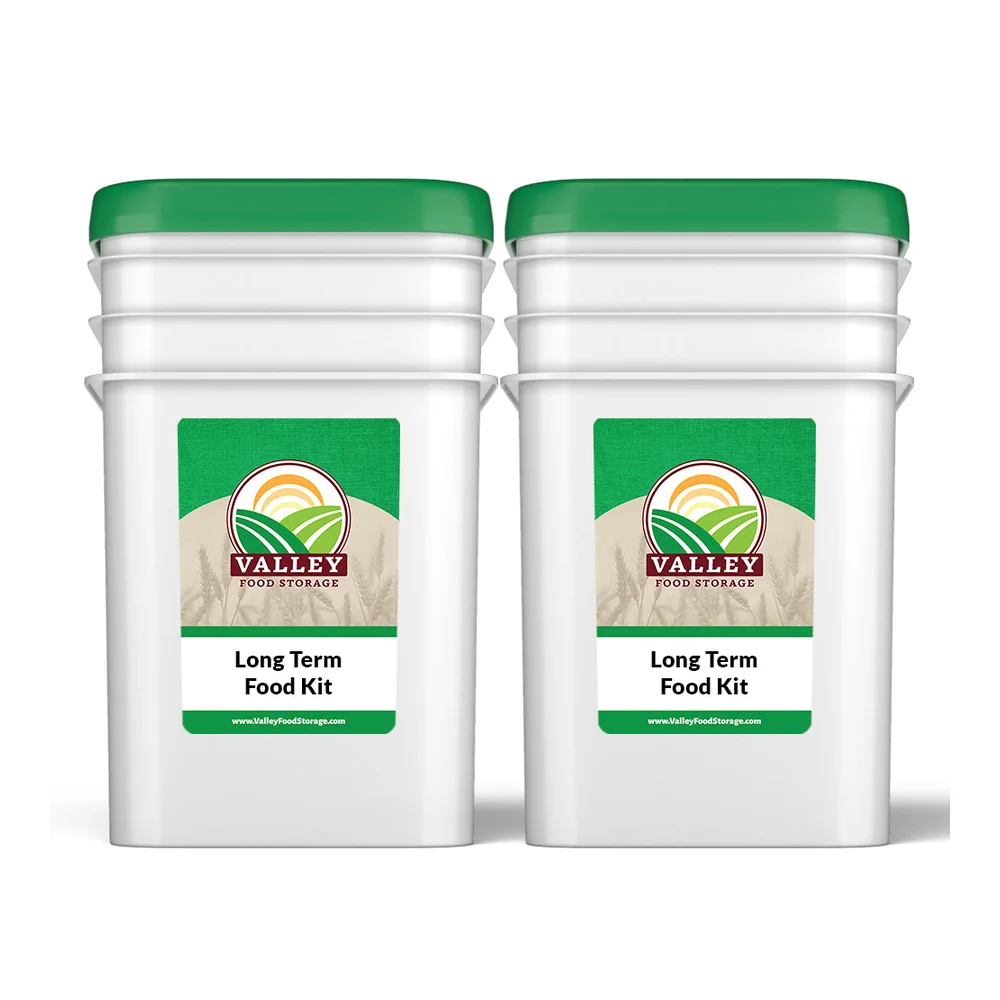
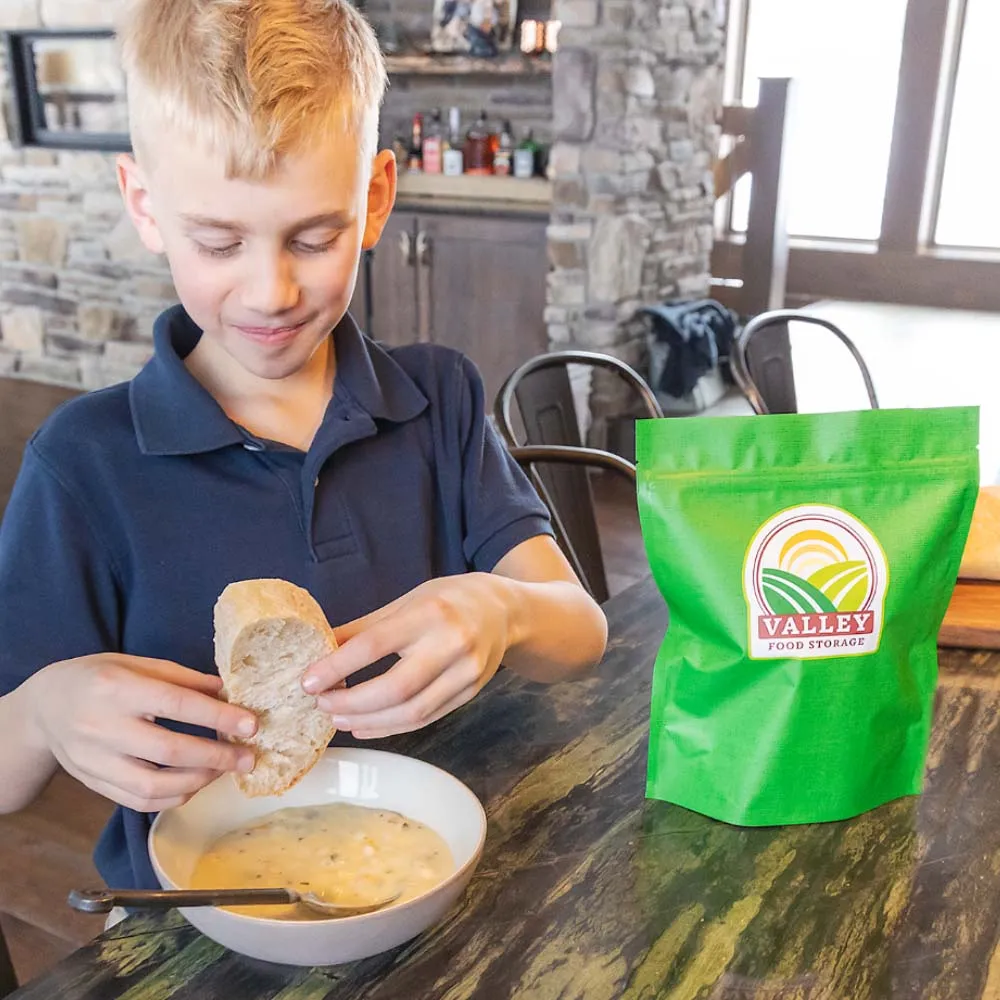
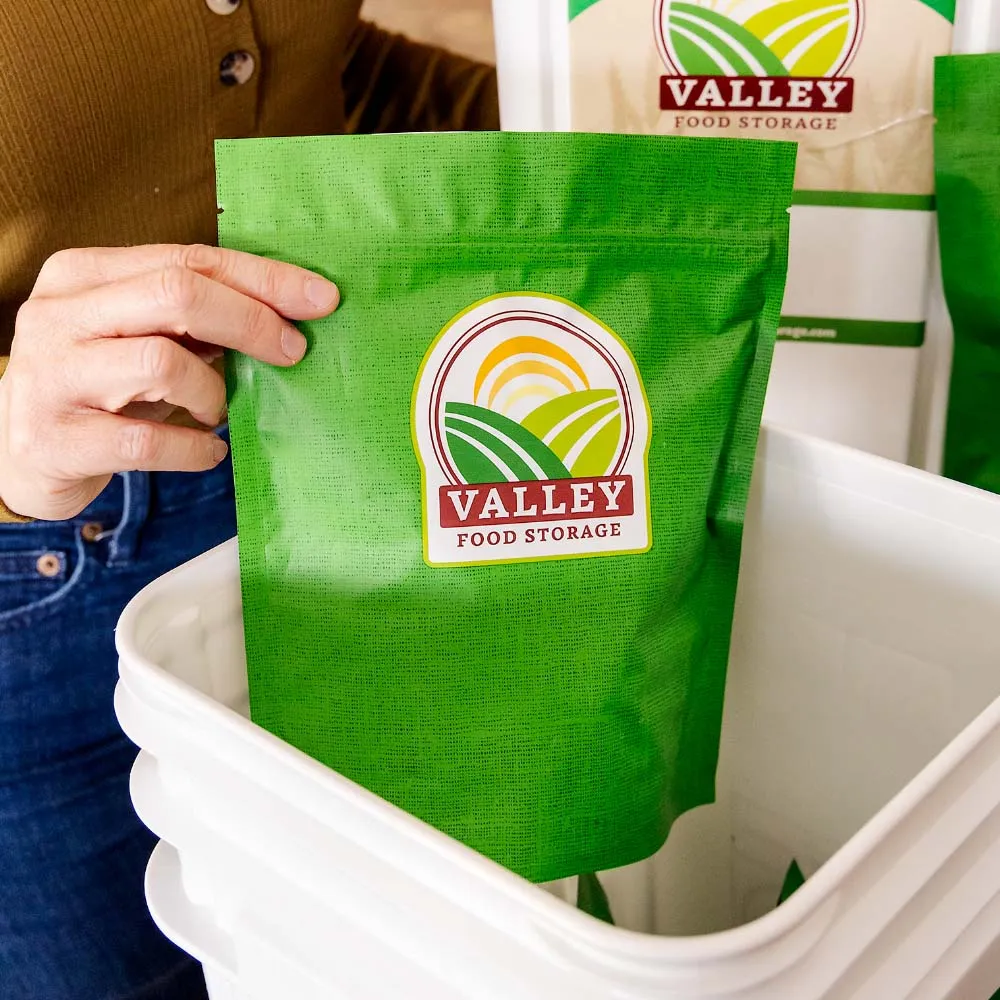
42 full-size resealable bags in two water-resistant buckets, 350 servings in all. Valley lists what the kit “may include”: oatmeal, multigrain cereal and cream of wheat for breakfast; entrees such as Fettuccine Alfredo, Mac & Cheese, Italian Wild Risotto, Mango Habanero Chili and White Bean & Lime Chili; dehydrated milk and freeze-dried cheddar; and freeze-dried corn, green beans, peas and potato dices.
- 42 resealable bags: breakfasts (oatmeal, cereal, cream of wheat)
- Entrees such as Fettuccine Alfredo, Mac & Cheese, Italian Wild Risotto, White Bean & Lime Chili
- Dehydrated milk and freeze-dried cheddar
- Freeze-dried corn, green beans, peas and potato dices
- Selections vary; Valley may substitute similar items
How many days does it last for 1, 2 or 4 people?
Servings are not meals, so we count calories. Valley Food Storage says the kit “averages 54,000 total calories”. At 2,000 calories per person per day, the reference used on US Nutrition Facts labels, that is:
| 1 person | 27.0 days |
|---|---|
| 2 people | 13.5 days |
| 4 people | 6.8 days |
2,000 calories is a planning assumption, not advice: needs vary by person. For how much to store, see our emergency food calculator, built on ready.gov guidance.
Cost per 2,000 calories
$448 ÷ 27.0 days = $16.59 per 2,000-calorie day. That puts it at No. 10 of 15 on price per calorie in our comparison. The same calculation is used on every kit; see emergency food cost per day for the full table.
How do you prepare it?
The kit page does not give one method; each bag carries its own instructions. Valley’s pitch is “easy to prepare”, which in practice means boiling water for most entrees.
What to do when the kit arrives
Because Valley lists what the kit “may include” and notes that all foods are subject to change, start by recording what you actually received. Open both buckets, list the 42 bags by recipe, and copy each bag’s allergen line: across its recipes Valley names milk, wheat, egg, soy, coconut and fish. Tape the list to a lid; it becomes your menu and your rotation plan. Do this without opening any bag, because Valley refunds unused food returned in the condition received, through its returns portal, within 30 days. Valley publishes no weight, so plan floor space for two buckets in a cool, dry place. When you start eating from the kit, the resealable bags are the strong point: squeeze out the air, close the bag and move it to the front so it is used first. Valley gives no opened shelf life, so treat an opened bag as the next one to finish rather than a long-term store.
Shelf life and storage
25-year emergency food shelf life “when properly stored and sealed”, says Valley Food Storage. The resealable bags help once you start eating from the kit.
Ready.gov, FEMA’s preparedness site, suggests keeping food in a cool, dry place and replacing expired items as needed. More in how to store freeze-dried food.
Ingredients, allergens and diets
Valley lists allergens per recipe on the kit page: milk in most, wheat in pastas and cereal, egg in pancakes and Alfredo, soy in the sweet and sour rice, coconut in several sauces, and fish in the White Bean & Lime Chili. Valley notes all foods are subject to change.
We quote the brand’s labels; we make no health or nutrition claims. For any allergy question, the label on the pouch you receive and the brand are the reference.
Valley Food Storage in brief
Valley Food Storage offers a 30-day return policy through its returns portal; unused food is refunded if returned in the condition received. On its 30-day kit page Valley says most orders are processed within 7 business days.
What owners say
We found no buyer comments on this kit’s page to quote. Valley’s 72-hour kit has video reviews on YouTube, but not this kit, so we embed none.
Hidden costs to plan for
Without a published weight or water total, plan storage space for two five-gallon-class buckets and water from each bag’s instructions. Return shipping costs are not covered in the policy we read. Valley’s pricing has one quirk worth knowing: its own “30 Day Emergency Food Kit” costs $759.95 for 58,200 calories, far more per calorie than this 28-day kit. On Valley’s store, compare on calories, not on the number of days in the name.
Questions to ask Valley Food Storage before you order
- What is the exact menu in the kit shipping now?
- How much do the two buckets weigh?
- Who pays return shipping on unused food?
How does it compare with similar kits?
The three kits closest on cost per 2,000 calories. Best value in bold.