Freeze-dried vs dehydrated food
Freeze-dried meals rehydrate fast with hot water; dehydrated staples cost less but need a pot and 12 to 20 minutes.
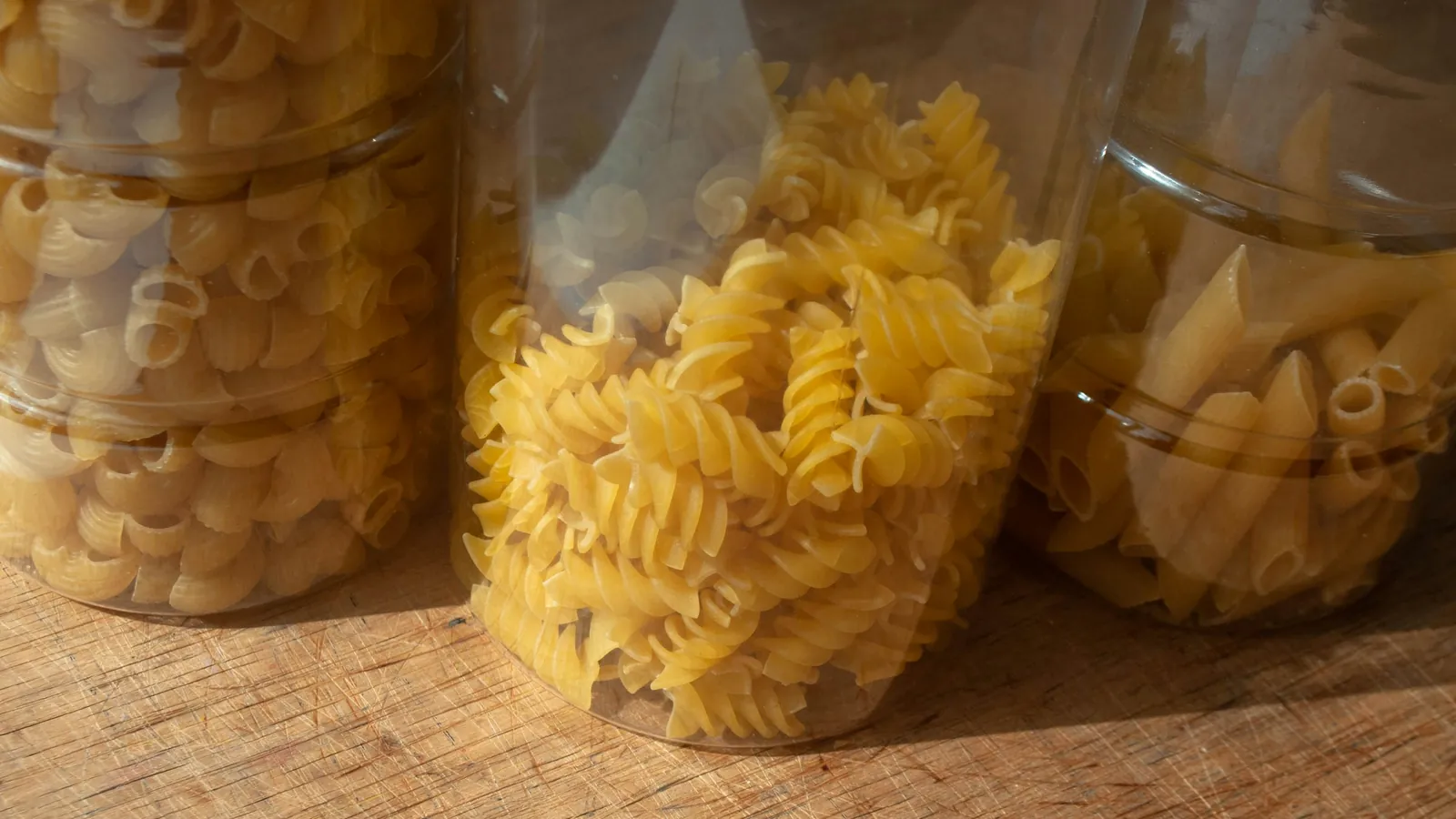
Freeze-drying removes water from frozen food under vacuum; dehydrating dries it with warm air. In emergency kits, the difference shows up at dinner time: freeze-dried pouches like Mountain House need only hot water, while kits built on dehydrated rice, pasta and potatoes (Augason Farms, 4Patriots, Legacy) simmer 12 to 20 minutes. The simmer kits cost far less per day: $9.46 for Augason Farms against $43.81 for the Mountain House Classic bucket.
What is the difference between freeze-dried and dehydrated food?
The USDA describes freeze-drying as a commercial process where frozen food goes into a vacuum cabinet and the ice “changes from a solid state directly to a vapor state without first becoming a liquid”, a step called sublimation. It adds that freeze-dried foods are shelf stable, must be rehydrated with water, and need moisture-proof, hermetically sealed packaging (USDA Food Safety and Inspection Service).
Dehydrating is the older, simpler method: warm, moving air drives the water out. Pasta, white rice, oats, potato flakes and drink mixes are all dried foods you already know. They are cheap to make and light to ship, but they usually need real cooking to come back to life.
In a kit, you rarely get one or the other. 4Patriots describes its meals as “dehydrated and freeze-dried”, Legacy and Emergency Essentials say the same, and Nutrient Survival mixes freeze-dried ingredients with dry mixes in #10 cans. Only Mountain House sells a bucket made entirely of freeze-dried meals.
Which one is easier to make in a power outage?
Freeze-dried meals win on effort. Mountain House’s method is to add hot water to the bowl-shaped pouch and wait the time printed on the meal: no pot, no stirring, no washing up. That is why it scores 10/10 on preparation in our formula.
Dehydrated staples need a pot. Augason Farms says most of its meals cook 12 to 15 minutes; Legacy’s entrees cook 12 to 15 minutes at a medium boil, then rest; 4Patriots asks for a 15 to 20 minute simmer. Ready.gov notes that charcoal grills and camp stoves are for outdoor use only (Ready.gov), so plan where you would actually cook.
Is freeze-dried food worth the extra cost?
Per calorie, the gap is big. Here are the kits in our comparison, sorted by preparation type, with the same cost-per-2,000-calorie math for each.
| Kit | Preparation | Cost per 2,000 cal | Days at 2,000 cal |
|---|---|---|---|
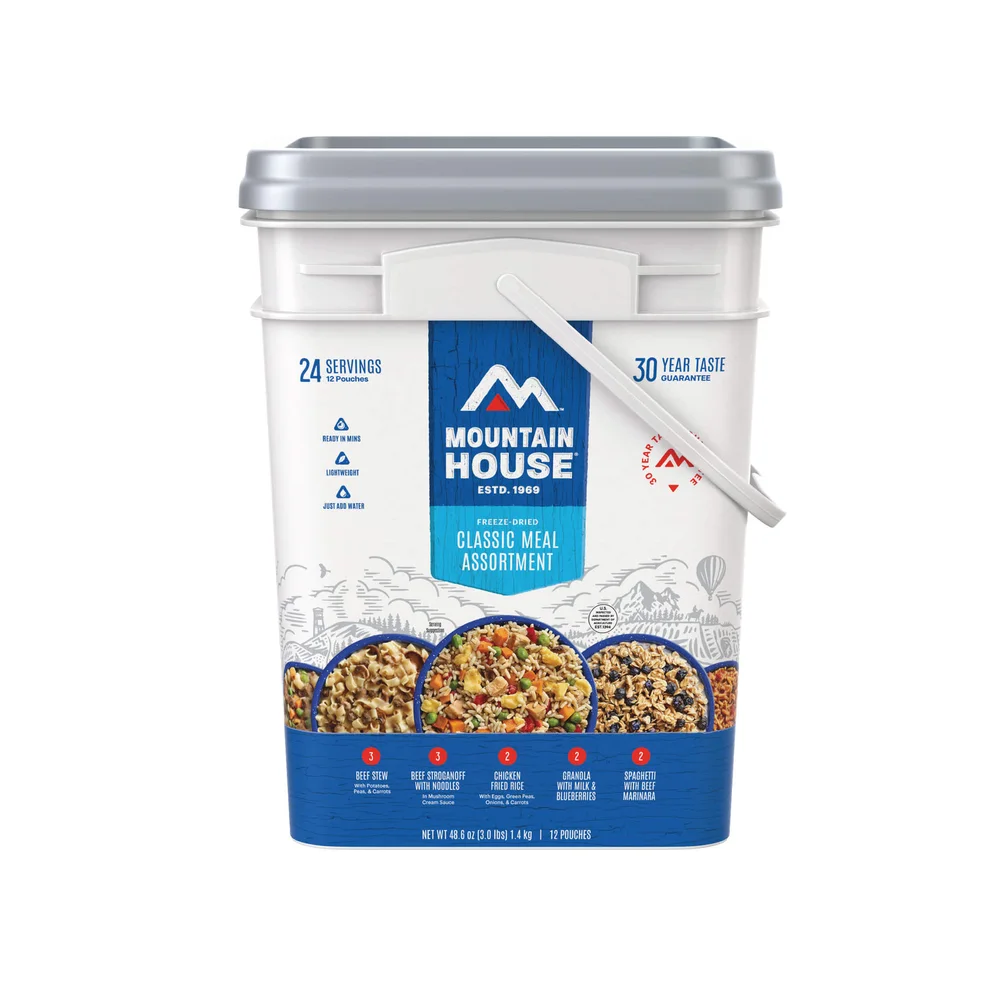 Mountain House Classic Meal Assortment Bucket7.7/10 · $134.49, Nov 15, 2026 | Hot water in the pouch | $43.81 | 3.1 days |
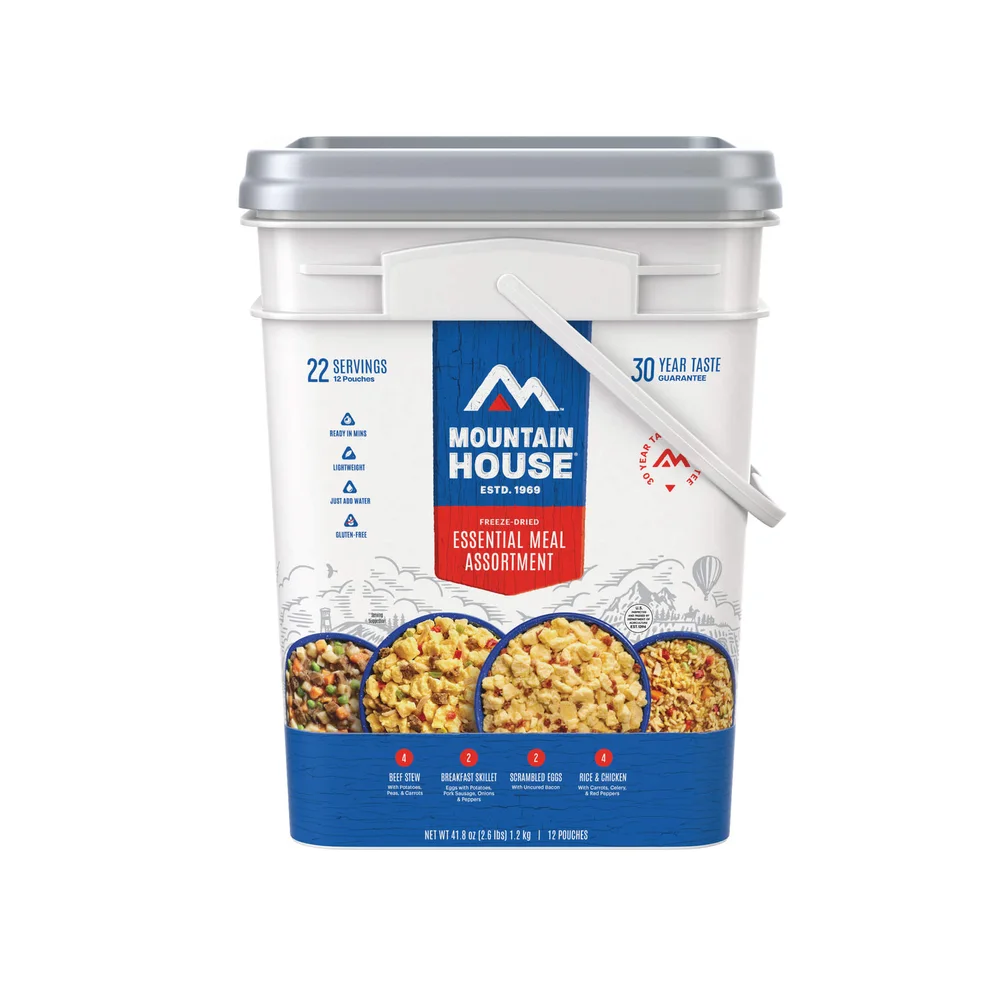 Mountain House Essential Meal Assortment Bucket7.6/10 · $129.99, Nov 15, 2026 | Hot water in the pouch | $47.97 | 2.7 days |
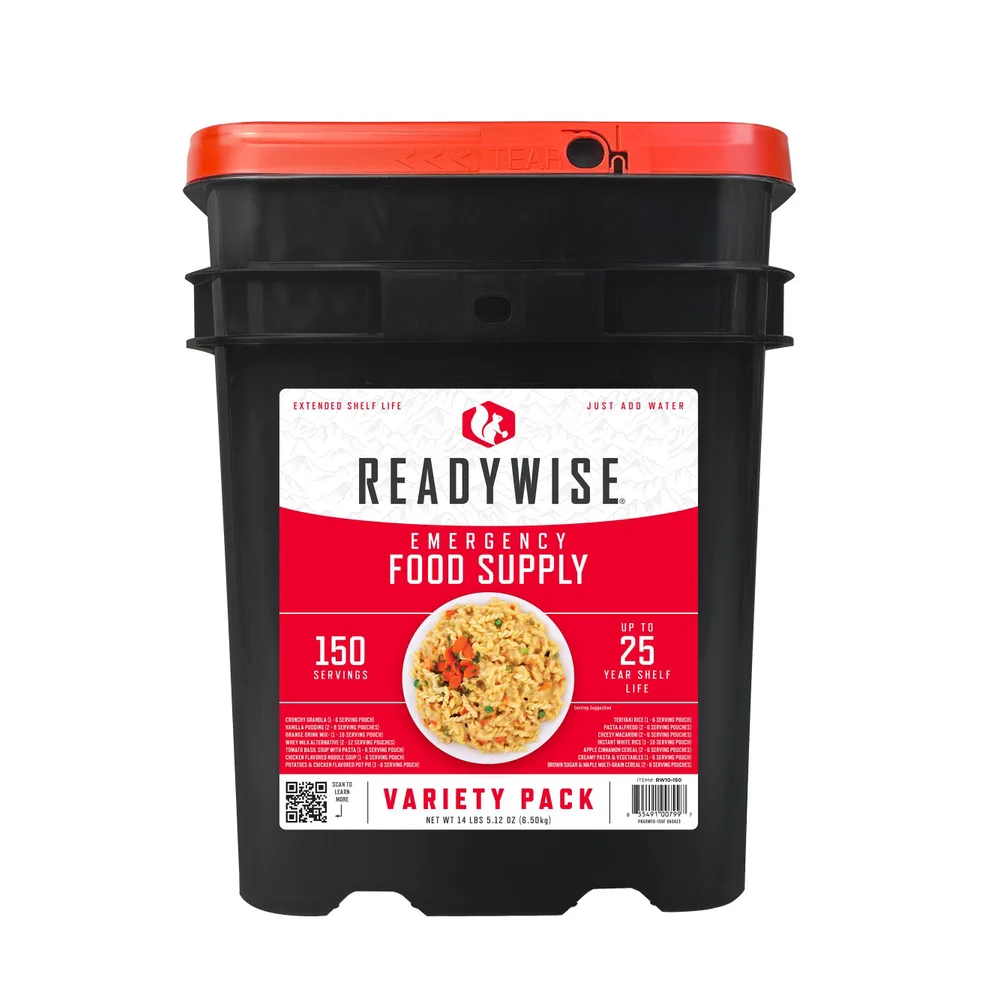 ReadyWise 150 Serving Emergency Food Bucket (Costco)9.4/10 · $104.99, Nov 15, 2026 | Add water and heat | $8.31 | 12.6 days |
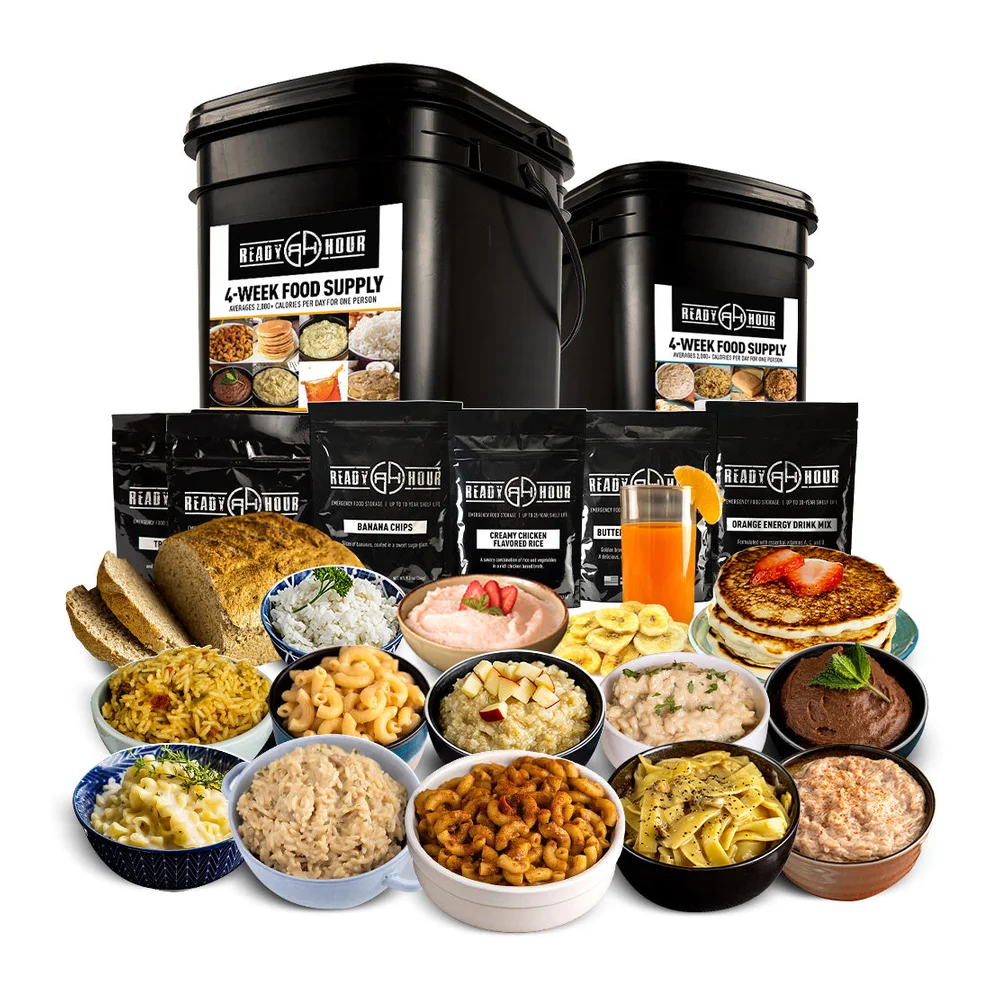 My Patriot Supply 4-Week Emergency Food Supply9.5/10 · $277.95, Nov 15, 2026 | Add water and heat | $9.85 | 28.2 days |
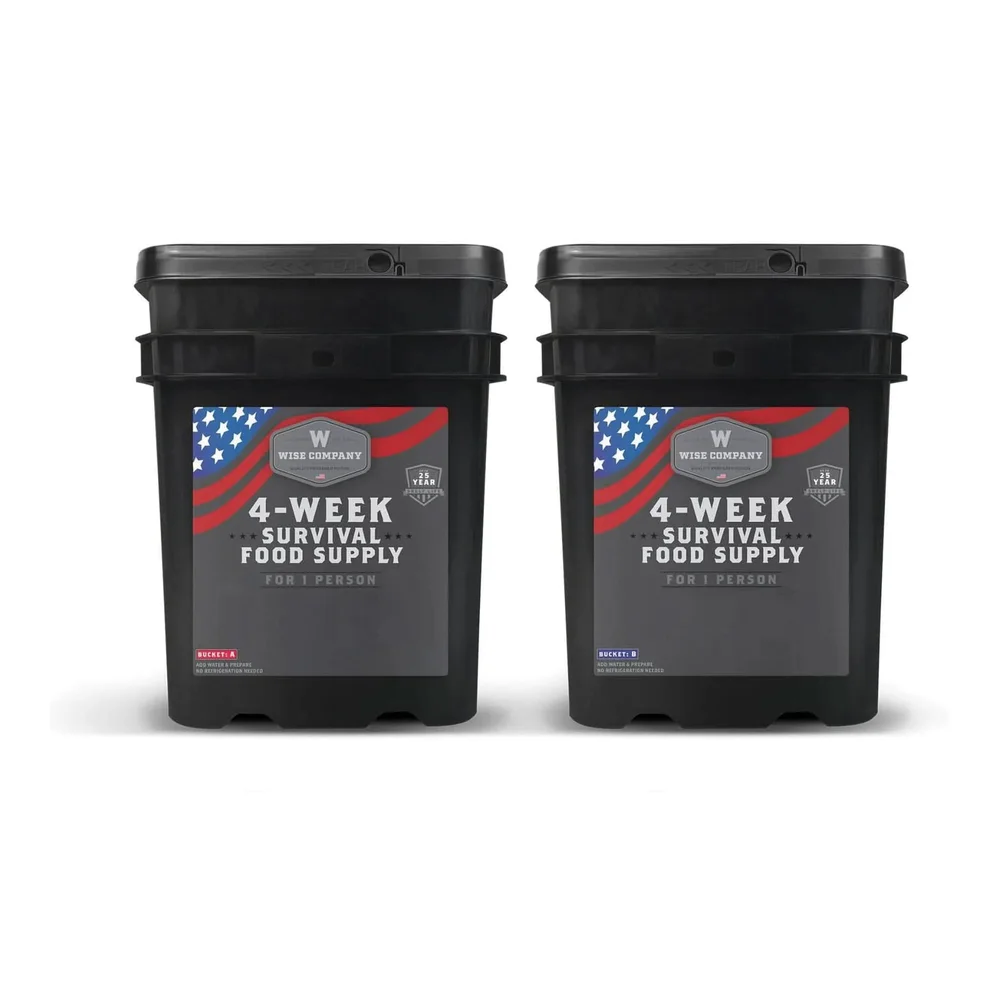 ReadyWise 4-Week Emergency Food Supply9.3/10 · $329.99, Nov 15, 2026 | Add water and heat | $13.09 | 25.2 days |
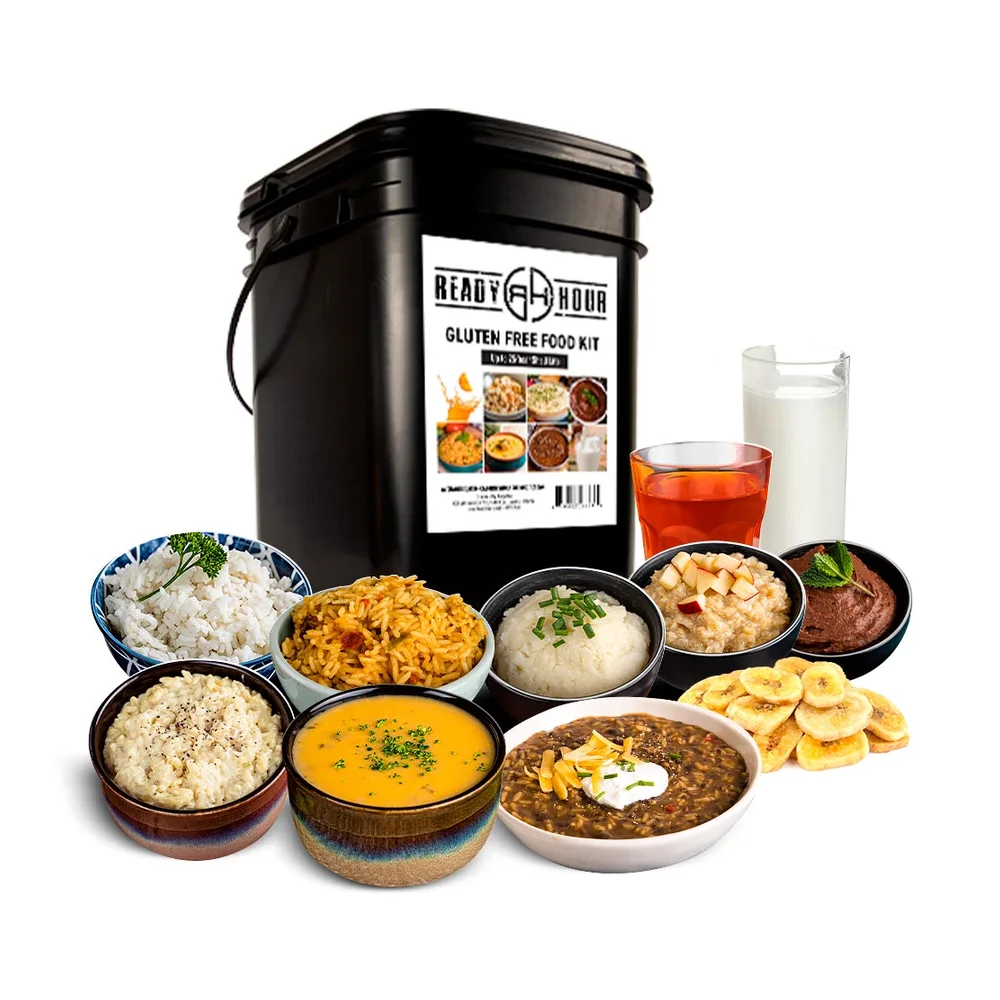 My Patriot Supply Gluten-Free Emergency Food Kit9.1/10 · $149.99, Nov 15, 2026 | Add water and heat | $13.12 | 11.4 days |
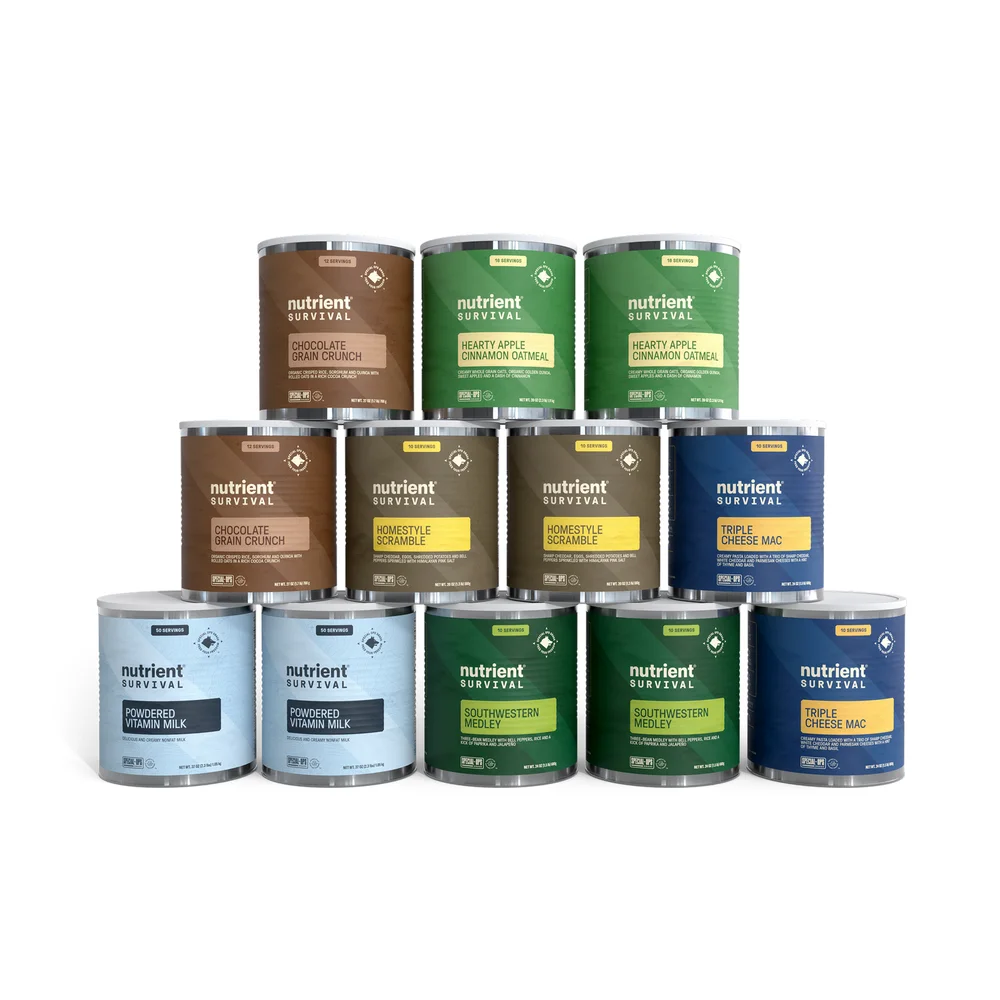 Nutrient Survival 30-Day Emergency Food Kit8.2/10 · $499.99, Nov 15, 2026 | Add water and heat | $25.61 | 19.5 days |
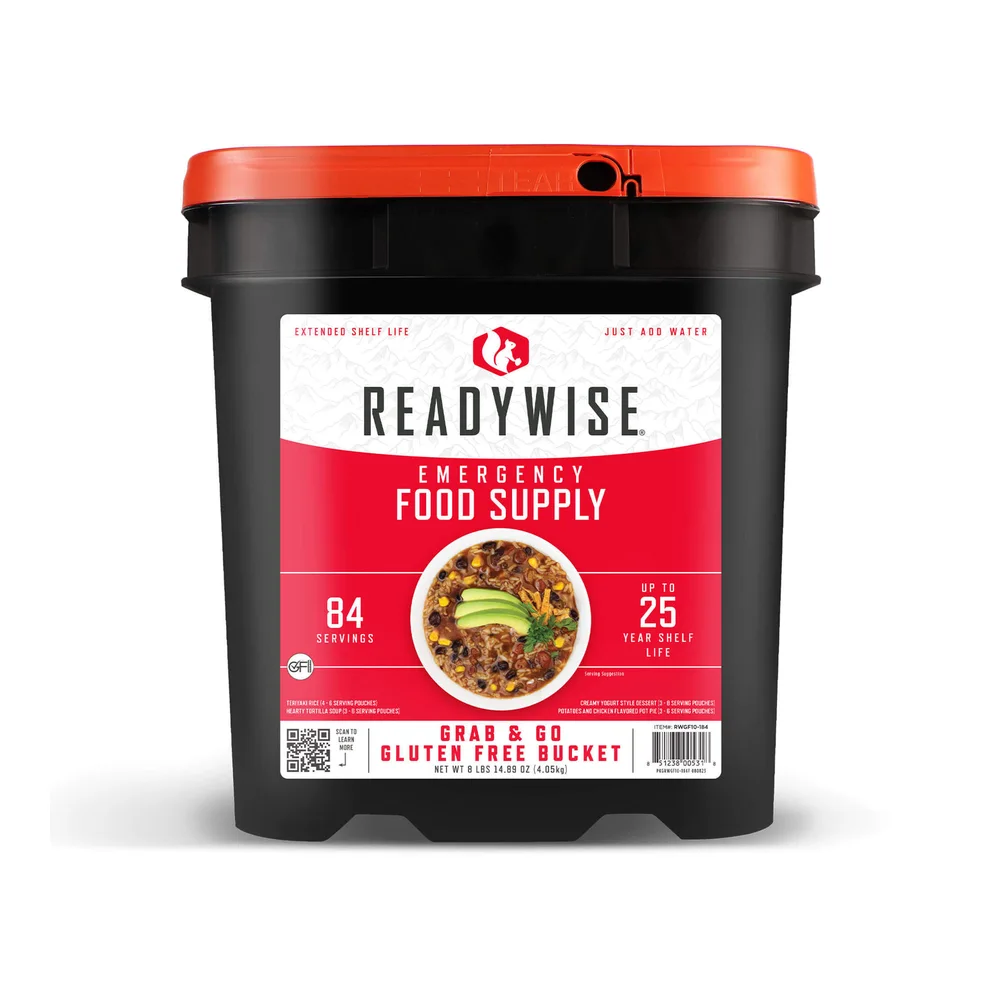 ReadyWise 84 Serving Gluten Free Grab and Go Bucket8.3/10 · $219.99, Nov 15, 2026 | Add water and heat | $28.53 | 7.7 days |
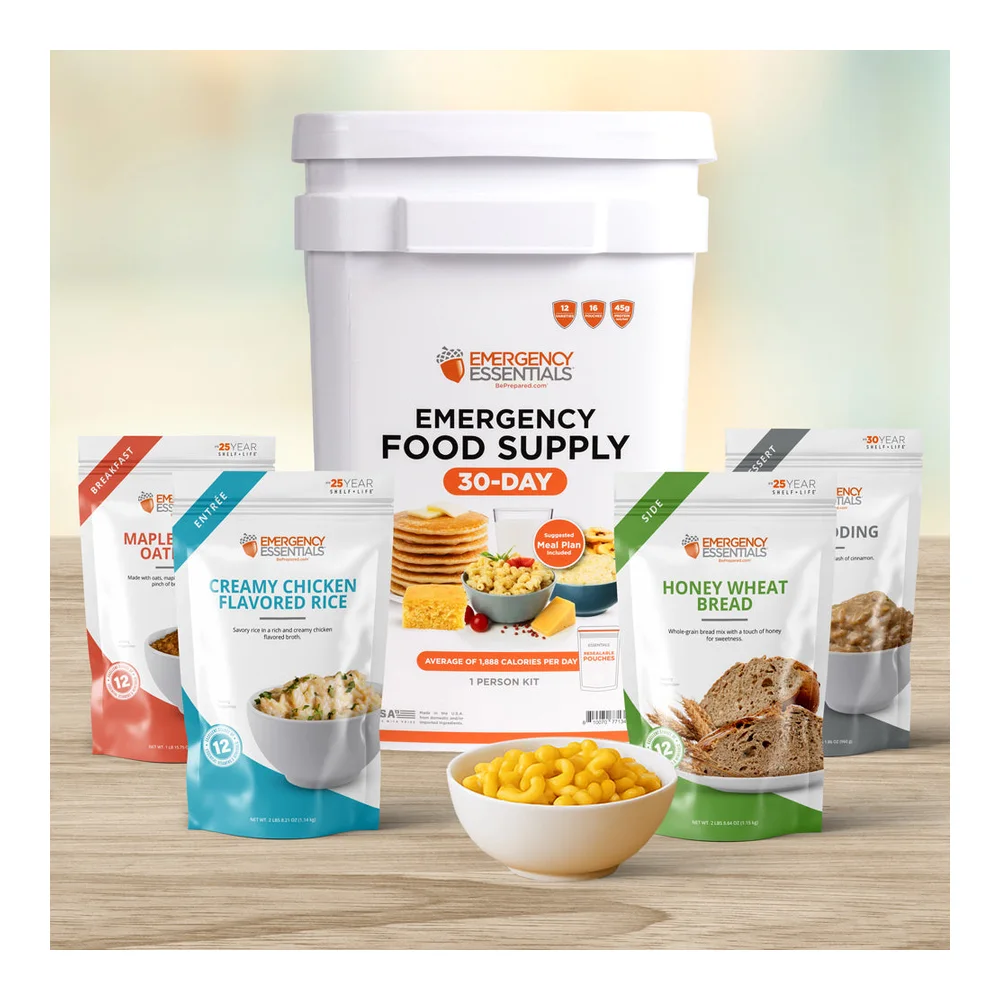 Emergency Essentials 1-Month (30-Day) Emergency Food Kit9.6/10 · $189.99, Nov 15, 2026 | Boil and simmer | $6.71 | 28.3 days |
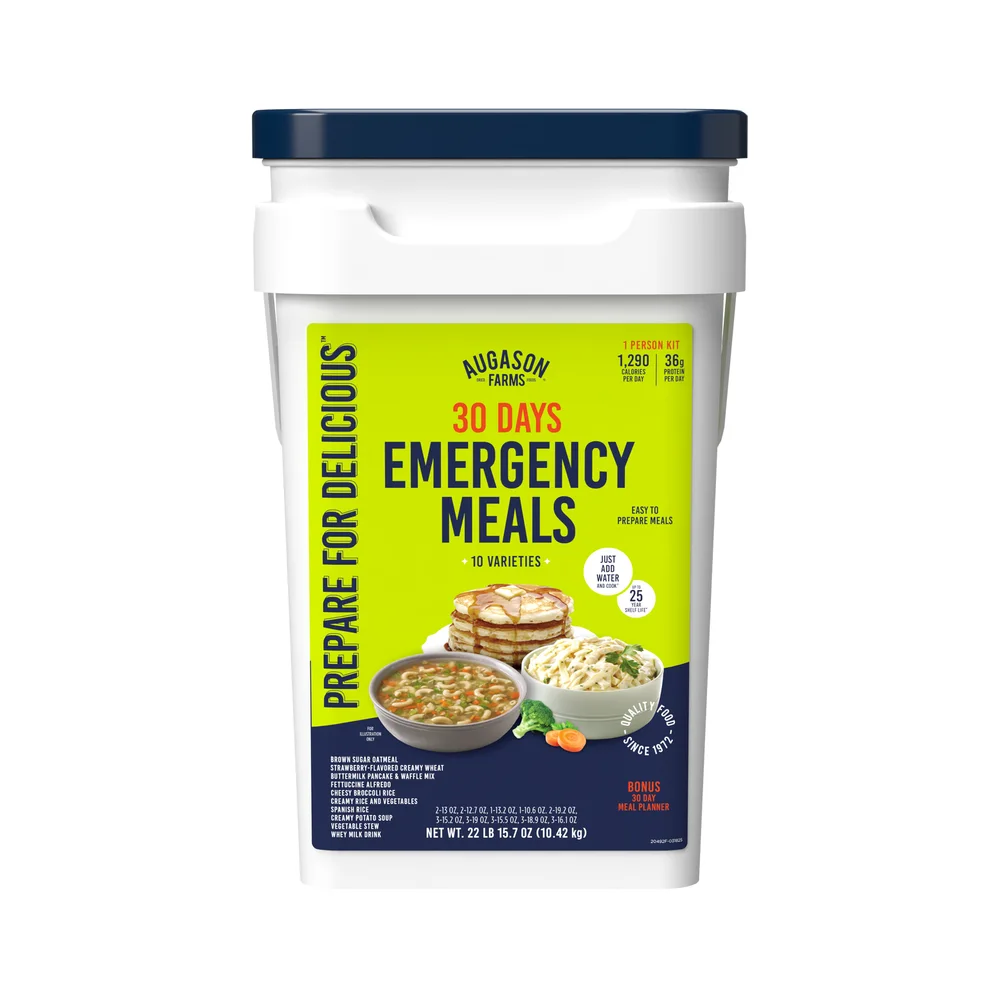 Augason Farms 30-Day Emergency Food Supply8.9/10 · $182.99, Nov 15, 2026 | Boil and simmer | $9.46 | 19.4 days |
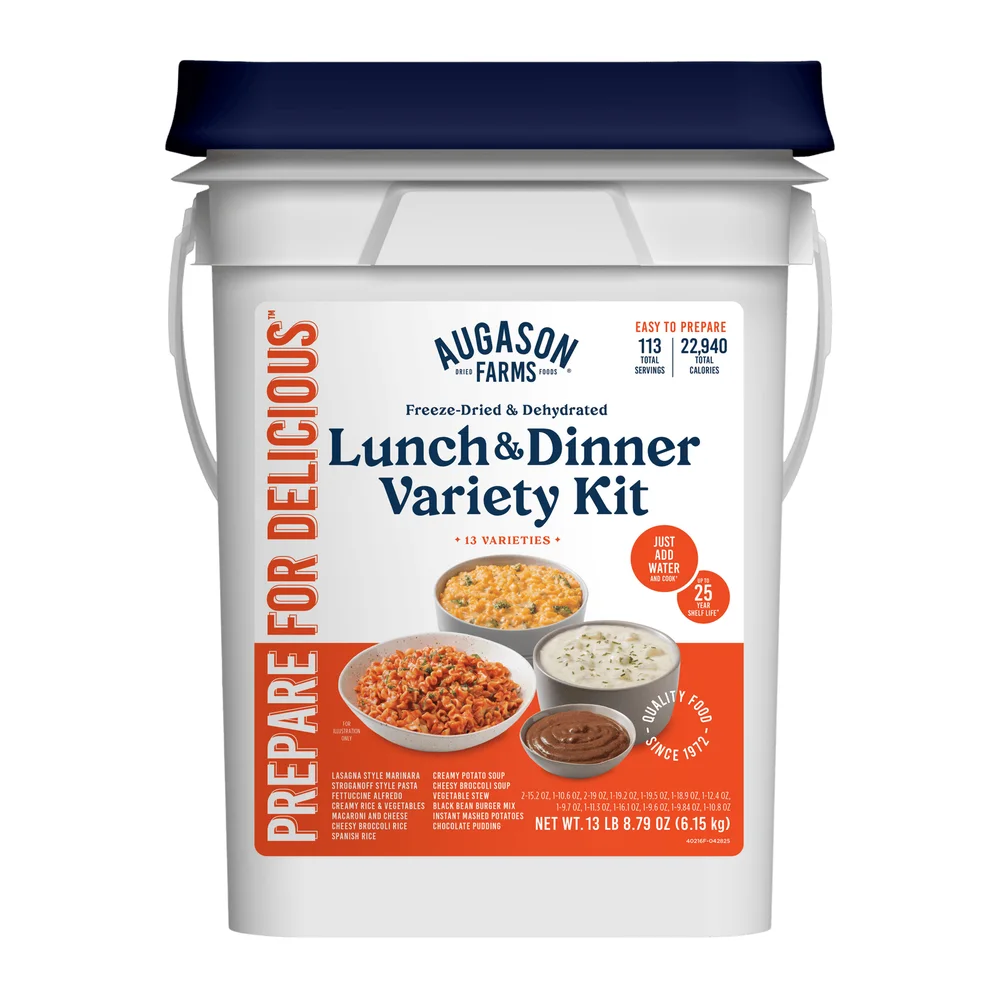 Augason Farms Lunch and Dinner Variety Pail8.7/10 · $126.99, Nov 15, 2026 | Boil and simmer | $11.07 | 11.5 days |
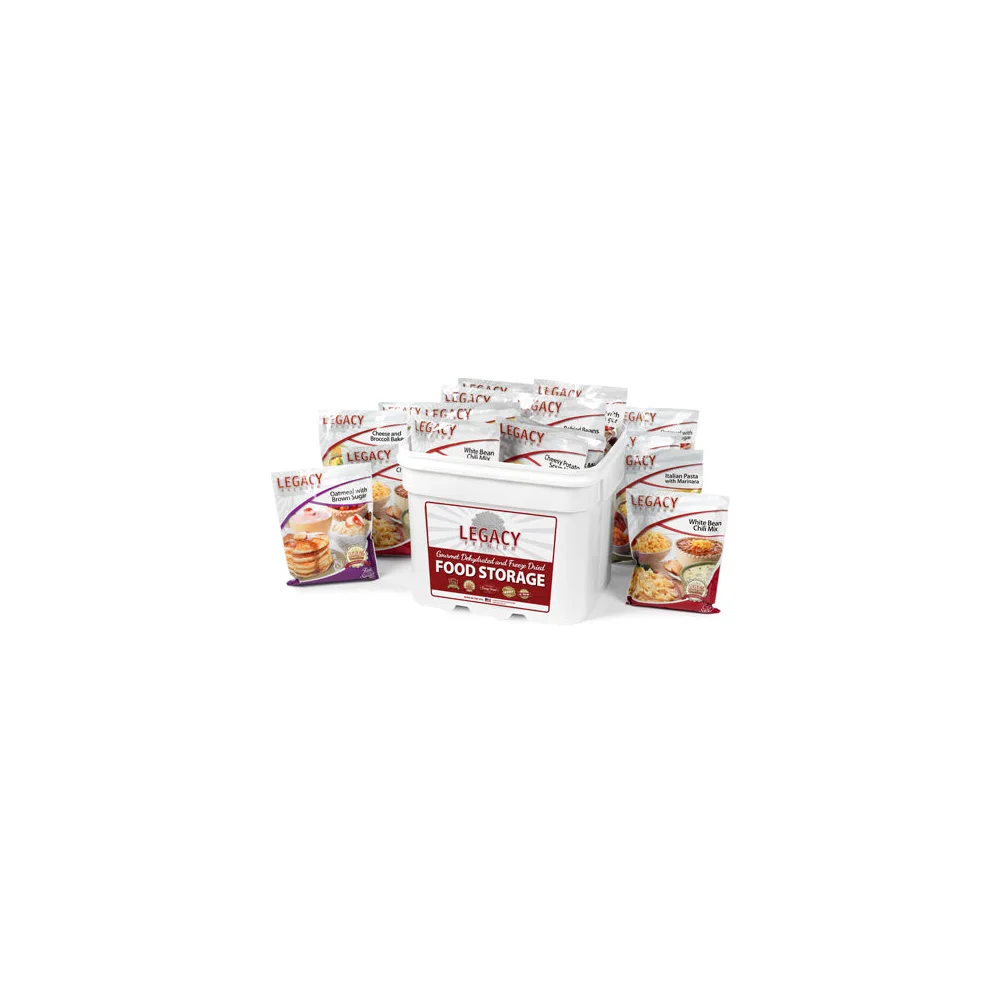 Legacy Food Storage 120 Serving Breakfast, Lunch & Dinner Bucket9.2/10 · $390, Nov 15, 2026 | Boil and simmer | $16.04 | 24.3 days |
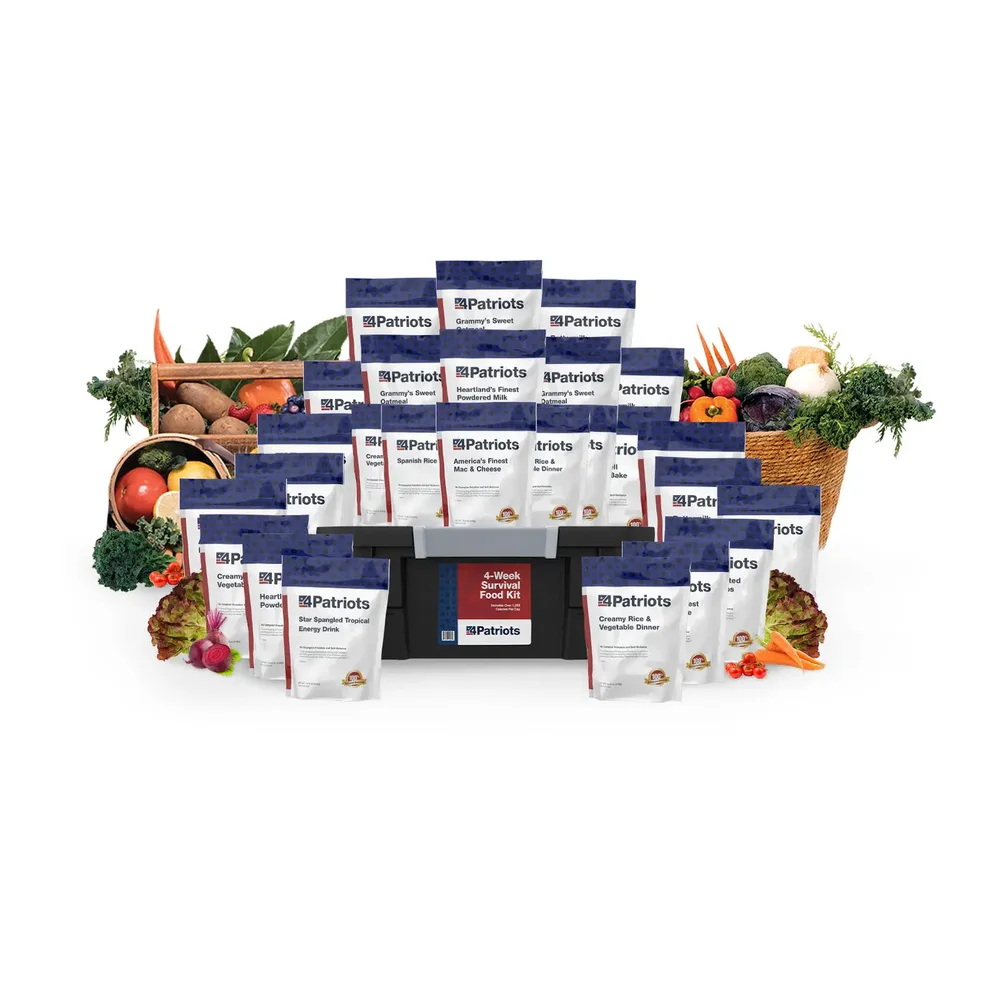 4Patriots 4-Week Survival Food Kit8.8/10 · $299, Nov 15, 2026 | Boil and simmer | $16.37 | 18.3 days |
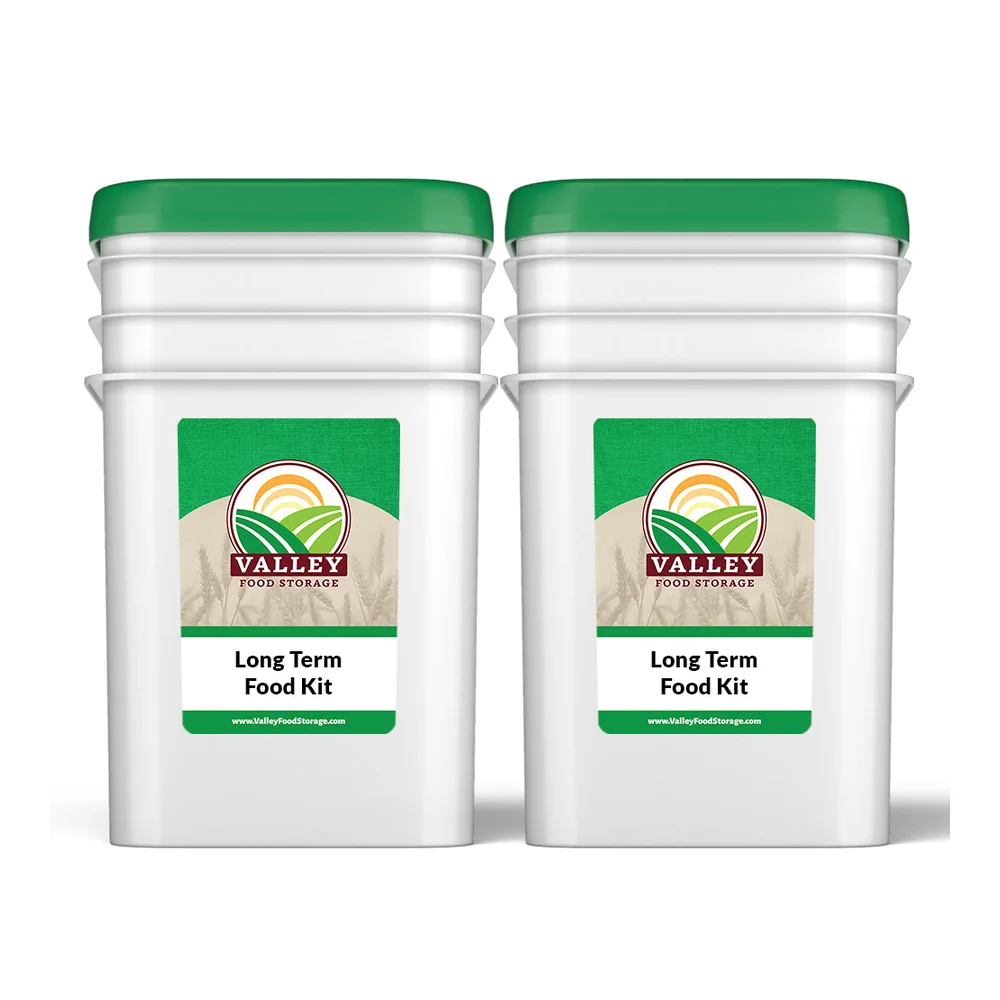 Valley Food Storage 28-Day Food Supply (350 Servings)8.6/10 · $448, Nov 15, 2026 | See each bag | $16.59 | 27.0 days |
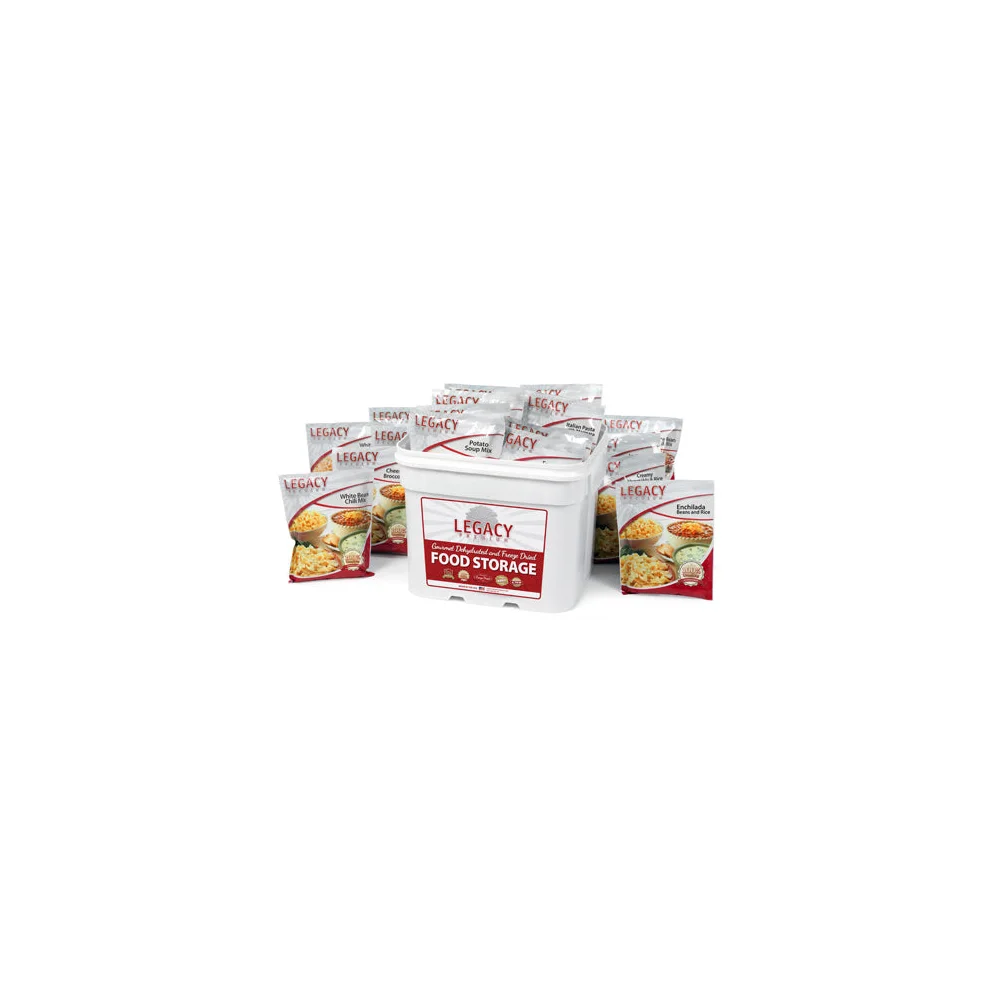 Legacy Food Storage 120 Serving Gluten Free Entree Bucket9.0/10 · $430, Nov 15, 2026 | Boil and simmer | $18.61 | 23.1 days |
The pattern is clear: the no-cook buckets sit at the top of the price scale, while the kits built on rice, oats and pasta land between roughly $7 and $17 per 2,000-calorie day. If your plan is a month at home with a working stove or a camp burner outside, dehydrated-heavy kits buy you far more food for the money. If your plan is a car kit or a go-bag, a few freeze-dried pouches make sense.
Does freeze-dried or dehydrated food last longer?
Brands state similar numbers for both: up to 25 years for most kits, 30 years for some items. What protects the food is the packaging. The USDA stresses moisture-proof, sealed containers for freeze-dried food (USDA Food Safety and Inspection Service), and kit makers use Mylar pouches with oxygen absorbers (Legacy and Emergency Essentials say so on their pages) or #10 cans (Nutrient Survival). Our guide on how long freeze-dried food lasts lists every brand’s claim side by side.
Which needs more water?
Both need water to rehydrate, and only a few brands publish the total. Per 2,000-calorie day: My Patriot Supply works out to 0.3 gallons, Emergency Essentials 0.3, 4Patriots 0.5 and Nutrient Survival 0.5. That water comes on top of drinking water: Ready.gov suggests one gallon per person per day for several days, for drinking and sanitation (Ready.gov).
How long does each kit take to rehydrate?
Every brand prints its own method, and the kits fall into three groups.
- Hot water in the pouch: Mountain House says to add hot water to the pouch and wait the time printed on the meal.
- Boil, then cover: Nutrient Survival says 4 of its 6 items want boiling water, then 2 to 10 minutes covered.
- Simmer in a pot: Augason Farms gives 12 to 15 minutes for most meals; Legacy 12 to 15 minutes at a medium boil plus 3 to 5 minutes of rest; 4Patriots 15 to 20 minutes.
Those minutes add up. Three simmered meals a day at 15 minutes each is 45 minutes of burner time, every day. If your backup is a camp stove, that is the figure to plan fuel around, and Ready.gov is clear that camp stoves and charcoal grills belong outdoors (Ready.gov).
Can you eat freeze-dried or dehydrated food without cooking?
Some of it. The USDA says that to use freeze-dried foods, they “must be rehydrated with water” (USDA Food Safety and Inspection Service). A University of Georgia Extension guide adds that some dehydrated foods, like fruits, can be eaten as is, and that dehydrated or freeze-dried foods are lightweight but need extra water planned for rehydrating them (University of Georgia Extension). In the kits we compared, the snack items fit that description: banana chips at 4Patriots and My Patriot Supply, banana slices at Emergency Essentials.
For a plan with no heat at all, Ready.gov suggests stocking canned foods, dry mixes and staples that do not require refrigeration, cooking, water or special preparation (Ready.gov). A freeze-dried kit does not meet that bar on its own, so keep a few ready-to-eat foods on the same shelf.
What does each option cost a family of four?
Multiply the cost per 2,000-calorie day by four people. The Mountain House Classic bucket, all freeze-dried, comes to about $175.23 a day for four. The Augason Farms 30-day kit, mostly dehydrated staples, comes to about $37.83, and My Patriot Supply’s 4-week kit to about $39.38. Over two weeks, the gap between the first two is roughly $1,923.65: that is the real price of not cooking.
Weight and storage space
Freeze-dried food is light, which is why it rules camping. The Mountain House Classic bucket weighs 5.52 lb, but it holds only about 3.1 days of food at 2,000 calories, which is 1.8 lb per 2,000-calorie day. Emergency Essentials’ 30-day bucket weighs about 31 lb for 28.3 days, or 1.1 lb per day. Per calorie, the heavy staple kits are often the more compact choice for a pantry.
So which should you buy?
- For a month at home on a budget: a dehydrated-heavy kit such as Augason Farms or My Patriot Supply, plus fuel for a burner.
- For a go-bag or the car: freeze-dried pouches, such as Mountain House, that only need hot water.
- For both: most families mix them; compare kits in the comparison tool.
Video: “Freeze Drying vs. Dehydrating How are they Different?”, Homesteading Family on YouTube. Loads from youtube-nocookie.com when you press play.
For the overall ranking on the same formula, see the best emergency food supply list, or the 30-day emergency food supply ranking if you are sizing a month.
Our three picks
Same formula as the main ranking; prices checked November 15, 2026.
Augason Farms 30-Day Emergency Food Supply
19.4 days at 2,000 cal · $9.46 per 2,000 cal
$182.99 at Augason Farms · price checked Nov 15, 2026
In stock at Augason Farms on Nov 15, 2026
My Patriot Supply 4-Week Emergency Food Supply
28.2 days at 2,000 cal · $9.85 per 2,000 cal
$277.95 at My Patriot Supply · price checked Nov 15, 2026
In stock at My Patriot Supply on Nov 15, 2026
Mountain House Classic Meal Assortment Bucket
3.1 days at 2,000 cal · $43.81 per 2,000 cal
$134.49 at Mountain House · price checked Nov 15, 2026
Sold out at Mountain House on Nov 15, 2026
In stock now: My Patriot Supply 4-Week Emergency Food Supply
Sources
- USDA Food Safety and Inspection Service, “Shelf-Stable Food Safety”, last updated Oct 24, 2024, read on November 15, 2026
- University of Georgia Extension, “Preparing an Emergency Food Supply, Short Term Food Storage”, reviewed March 2020, read on November 15, 2026
- Ready.gov, “Food” (FEMA), last updated 03/12/2026, read on November 15, 2026
- Ready.gov, “Build A Kit” (FEMA), last updated 07/01/2026, read on November 15, 2026
- Brand figures: the product pages linked from each review, read on November 15, 2026
Some links are affiliate links: we may earn a commission at no extra cost to you. It never changes our scores. Disclosure.